Thursday, December 22, 2022

North-Eastern Chronicle - Part 1

India is the land of the Himalayas, the country of spirituality, and the place where four of the world's major religions were born. It is also a country that has a lot to offer in terms of nature and culture, that can be rivaled by few other countries in the world.

The North-east region of India is unique in many senses: not as crowded as other parts of India, largely unexplored barring a few places, and one of the most off-beaten destinations. The region offers pristine views and some of the most beautiful landscapes in India- from lush green tea plantations to snow-capped foothills of the mighty Himalayas. And of course, the never-ending streams and falls. 

The planning

Four of us - ex-colleagues turned friends decided we'll go someplace in the East this winter. Bhutan and Arunachal Pradesh were the two contenders, Arunachal won for budget reasons (we learned Bhutan has turned very pricey for foreign tourists, especially after Covid). One of our friends in the group is from Guwahati. He suggested that there is this "Hornbill festival" that happens in Nagaland from Dec 1 to 10 every year - we can witness that too if the time matches. This (Nagaland, Guwahati, Arunachal) formed the skeleton of the trip in which Arunachal was the core.

I'll briefly highlight the important places covered on the trip.

Guwahati, Assam

The Kaziranga National Park is one of the most well-known destinations in Assam. The park is home to two-thirds of the world’s population of one-horned rhinoceros. We took both an elephant safari (highly recommended) and a jeep safari. 


Rhino sights are common along with elephants, wild buffalos, deer, etc. The national park also houses 100 odd tigers - of course, their sightings are quite rare. 

Assam, along with a few other states in the East is a diverse and culturally rich state - with close to one hundred distinct tribes (Bodo, Kachari, Rabha, Lalung, Karbi and Garo to name a few), foods, dresses, etc. The cultural show that gets organized in the orchid park showcases all the varieties of dance, and music forms of Assam. The orchid park also showcases the varieties of the flora of the state.

The Kamakhya temple is located in the heart of the city and is dedicated to Goddess Kamakhya. It is one of the 51 Shakti Peeta spread across the sub-continent, which are shrines that represent the goddess’s body parts. The temple has been an important pilgrimage site for centuries and is visited by both Hindus and Buddhists alike.  
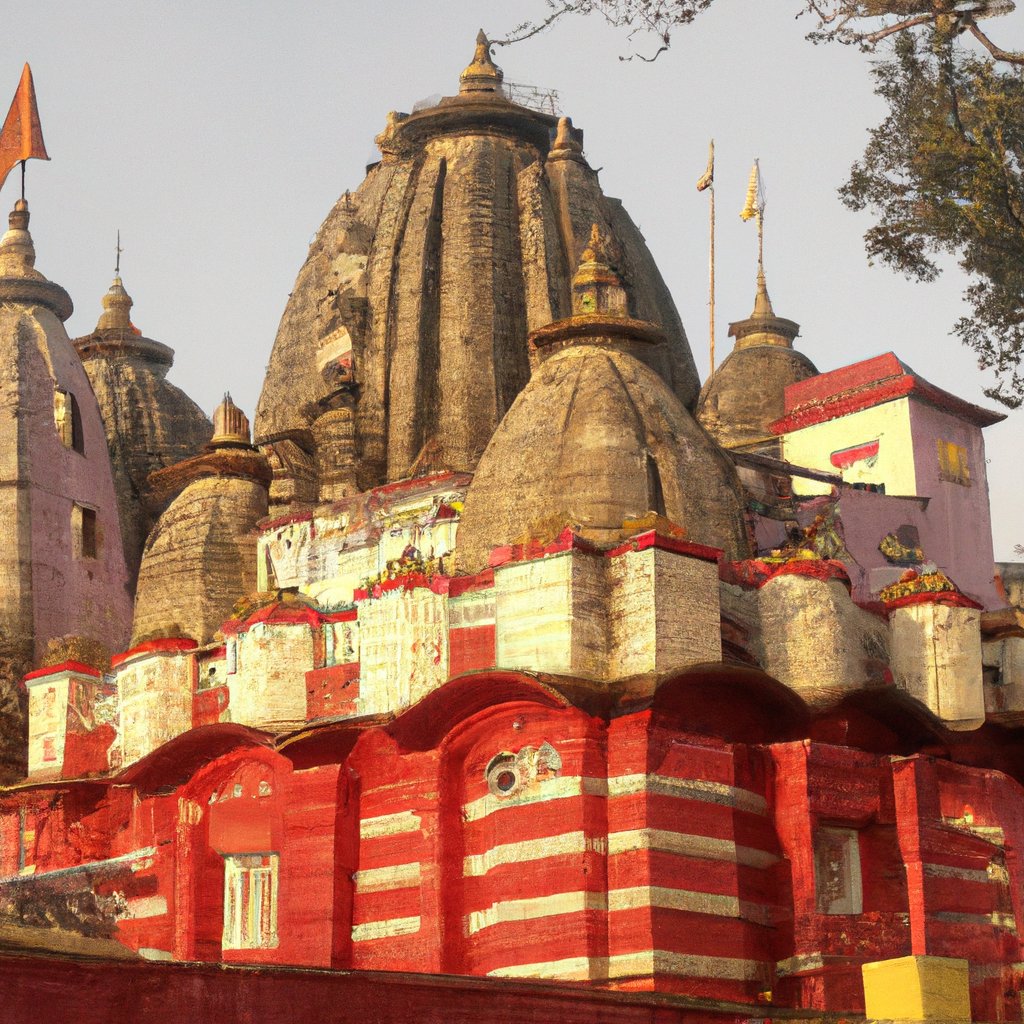
It's one of the few prominent temples where tantric practices are carried on to date. It was a different kind of experience for most of us as this was unlike most of the temples we had been to.

Nagaland

Nagaland is a very small state in the northeast, and it is also one of the most exotic places in India. The people are mostly tribal, and the Christian missionaries have converted them a century ago to Christianity, and the vast majority practice Baptism. English is the official language.

Apart from the natural beauty, Nagaland is also known for its tribal festival called Hornbill Festival which takes place every year from December 1 to 10 in the capital city of Kohima is an annual festival that celebrates the culture, tradition, and history of Nagaland. The festival lasts for ten days, and it includes different events such as arts, crafts, music, sports competitions, etc., which showcase the colorful traditions of Nagaland to outsiders too.


A prototype Naga village representing one of the tribes

You will have a tough time if you are a vegetarian as the options are very scarce (even for non-vegetarians the options are mostly to do with pork, chicken, and beef). Since we had only a night and two days scheduled for Nagaland, we couldn't cover other places of interest like Dzüko Valley which would be a great place to visit if you have one day extra. Entering Nagaland requires an inter-state permit which is to be taken beforehand. This is the same case with Arunachal Pradesh too.

The other places of interest in Kohima were the war cemetery (a memorial dedicated to the 2nd British Division of the Allied Forces who died in the Second World War at Kohima) and the cathedral of Kohima which we visited on our way back to Guwahati. We needed a break before our much-awaited sojourn to Arunachal Pradesh (we'll cover this in the next and final part).

Monday, December 27, 2021

An update, announcement

I started blogging in 2010 - which is just about a decade ago. When I started, I did not have anything specific in mind - I just liked writing. The name was different at the beginning (not Theme India), which I don't remember. But as it evolved, I observed most of the posts had one common theme - India. Hence the name.

There are some digressions of late - there were posts that were just monologues, some of them sort of you could find in personal diaries, some travelogues, things like that. I thought it was important to have one more medium - one dedicated to India-centric topics and the other for the rest. 

Although I considered having my own domain, personal and professional commitments are not allowing me to spend the time I used to spend before in blogging which doesn't justify having my own domain. Hence I have started my other blog in "Medium".

Blogging has been a great journey so far. Thanks for all the encouragement, kind words of support in all these years. This space will remain and continue. Thank you.  

Saturday, April 25, 2020

A day with the Irishmen - An Irish Saga

First things first. Whenever I refer to Ireland in this post, it's always Northern Ireland. I carried a UK visa - it allows you to visit Northern Ireland but to visit the rest of Ireland, i.e. the Republic of Ireland you need an extra visa. Even if you carry a valid resident's permit, that wouldn't suffice. We had a lot of drama at the airport with regards to this - we'll keep that story for some other day. Although we stayed in Ireland for 4 days, I'll restrict this post on our one-day tour to Carnlough, Cushendun, Carrick-a-Rede Rope Bridge, Giant’s Causeway, The Dark Hedges, Dunluce Castle, etc. Some of these locations were used extensively for the filming of the famous TV series Game of Thrones.


Carrick-a-Rede Bridge
 
Carlough Bay
It came as a genuine surprise for me when I came to know how deeply influenced was the Game of Thrones series by Irish history and mythology (some say even Welsh mythology too). In one of his recent interviews, the creator of "A song of ice and fire" George R.R Martin admitted that there is a considerable influence of Irish mythology on Game of Thrones and the fictional continent of Westeros is in fact based on an inverted map of Britain and Ireland.

Cushenden Caves
Dark Hedges
Our guide for the day was a thorough Irishman, but English only in name (His second name was English, I forgot his first). He turned out to be a consummate professional, at the end of the day all I was left with was a genuine admiration for the man for his humor, wit, knowledge, candidness, and most importantly how he respected and kept time. He gently warned (kept warning throughout) all the tourists to be mindful of time quoting famous song of the popular band U2 (an Irish band) "with or without you", meaning the coach would leave on the designated time no matter what. I've mostly tried to capture all the things he narrated (of course I cross-verified them, most of them true and some were myths)

Pre-Christian Ireland

St. Patrick is considered to be the patron saint of Ireland (on an unrelated note it is St. David for Wales). He is credited to have converted Ireland from paganism to Christianity. There were invasions in the first Millenium both from the Vikings and Anglo-Normans (from our conversations later in Wales, Norman invasion seemed like a big deal). Celtic imagery in the form of Celtic crosses among others is strong not only in Ireland but also in Scotland.

Some striking resemblances from Irish mythology/History and GoT

Children of the forest: Children of the forest were the original residents of Westeros, and they worshipped forest, naturalistic spirits - in short, a primitive form of animism - this has very strong parallels with Celtic mythology. Celts were perhaps the first group to inhibit Britain and were animists are they did worship trees, also believed the world around them as part of the divine.

Red Wedding: GoT fans would definitely remember the episode of "Red Wedding" in which a lot of important characters like Robb and Catelyn Starks etc. are killed in a stealthy manner over dinner. Even during the dark ages, it was a well-known rule that a host and guest were not allowed to harm each other even if they were enemies. This rule was flouted and has two precedents in history: Black dinner and the Massacre of Glencoe.

A few other interesting tidbits:

We saw a lot of sheep grazing the meadows and were colored differently. Our guide jokingly said they were colored whether they belonged to unionists or nationalists. Or, maybe he was serious, I couldn't say.

He also narrated the story of Sean O' Neil and how he won one of the contests (by severing his arm and throwing towards the finishing line). Since I don't remember the details and also couldn't find any back-up material, I've not expanded the story here.

Also, our guide narrated the story of "Diarmuid and Gráinne" famous in Irish Folklore.

Some Famous Clans

He made too many references to the clan McDonald who originally came from Scotland and was a violent tribe and acquired their wealth and power primarily through violent means. They were perhaps the largest clans from Scotland.
The current state of Dunluce Castle
One more powerful clan back in the day was the Clan McDonnell — One of their remaining vestiges today is the Dunluce castle. We saw it from a close distance — It's in a very dilapidated state (It is used to depict the Seat of House Greyjoys in GoT).

The rivalry between Anglican and Catholic Church

Spanish armada was an attempt to invade England by Spanish King Phillip II in the later part of the 16th Century. It consisted of over 100 ships and were met with solid defense from the English. The armada was eventually defeated. They attempted to return home through the Atlantic, but due to violent storms, they were forced toward the west coast of Ireland. There were multiple wreckages in the event and many people perished but there were about 9 survived. Learning of the events, Queen Elizabeth I ordered to kill them all. Needless to say, all of them were Catholics.

One more strong example for the case is Henry VIII and his daughter Mary I, also known by the sobriquet "Bloody Mary".

In Conclusion

Ireland is a beautiful country full of spectacular sights, a pleasant climate with a dash of rugged Atlantic beaches enshrouded with mystery. This combination surely beckons the romanticists and adventurists alike.